What is Engraving?
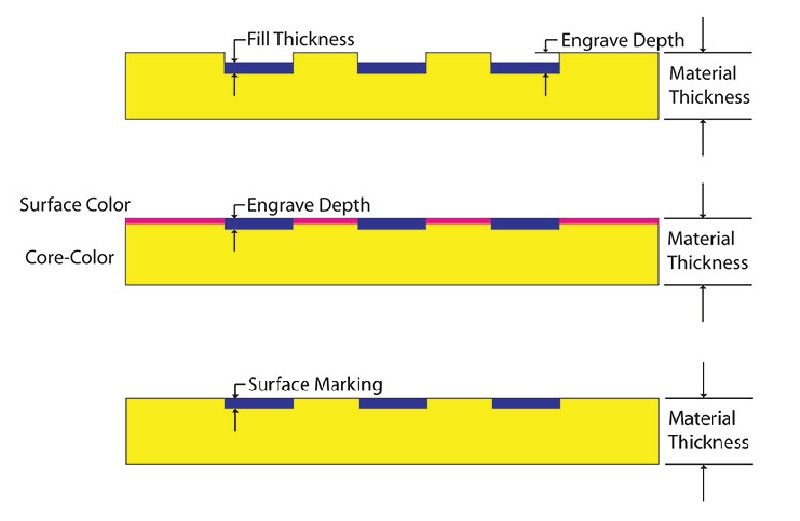
Engraving is a subtractive manufacturing process that removes material from a substrate (metal, plastic, wood, glass, etc.) using mechanical or laser tools to create permanent, tactile, and high-contrast graphics, text, logos, or patterns. Unlike printing (which sits on the surface), engraving forms recessed or raised features integrated with the material, ensuring exceptional durability and long-term legibility—even in harsh industrial, outdoor, or high-wear environments.
Common Types of Engraving Processes
1. Mechanical Engraving (CNC Router / Rotary Engraving)
How it works:
Uses a rotating cutting tool (burin, carbide bit, or diamond drag tip) controlled by CNC (Computer Numerical Control) to physically carve into the substrate. The tool removes material to form recessed (engraved) or raised (cameo/relief) features.
Key Materials:
- Metals: Stainless steel, aluminum, brass, copper, zinc alloy
- Plastics: ABS, PVC, acrylic, polycarbonate, dual-color sheets
- Composites: Phenolic, G10/FR4, engraved laminates
Process Steps:
- Design → vector file (AI, DXF, EPS)
- Toolpath generation (depth, speed, tool type)
- Fixturing (secure substrate to prevent movement)
- Machining (cutting / routing / drag engraving)
- Deburring & cleaning
- Optional: paint filling, anodizing, plating, or coating
Advantages:
- Deep, tactile engraving (ideal for control panels, safety labels)
- Works on thick or rigid materials
- High material removal rate for large text/logos
- Cost-effective for medium-to-large runs
Disadvantages:
- Limited fine detail compared to laser
- May produce burrs (requires deburring)
- Tool wear affects consistency over long runs
2. Laser Engraving (Laser Marking / Laser Etching)
How it works:
Uses a focused high-power laser beam (CO₂, fiber, or YAG) to vaporize, melt, or oxidize the substrate surface—creating high-precision, permanent marks without physical contact. Laser engraving can produce:
- Recessed marks (etching)
- Surface discoloration (marking, no depth)
- Foaming/charring (on plastics)
- Annealing (color change on metals without removal)
Key Materials:
- Metals: Stainless steel (fiber laser), aluminum, titanium, brass
- Plastics: ABS, PVC, PET, polycarbonate, dual-color sheets
- Glass, ceramic, stone, wood, leather
Process Steps:
- Design → vector/raster file
- Laser parameter setup (power, speed, DPI, frequency)
- Fixturing & alignment
- Laser engraving/marking
- Cleaning (residue removal)
- Optional: coating, filling, or finishing
Advantages:
- Ultra-high precision (fine text, small QR codes, complex logos)
- Non-contact → no tool wear, no burrs, no material deformation
- Fast setup & short-run efficiency
- Versatile: can mark, etch, anneal, or foam in one system
- Works on flat, curved, or irregular surfaces
Disadvantages:
- Limited depth (typically <0.004” / 0.1mm for metals)
- Higher equipment cost than mechanical engraving
- Some materials (e.g., clear PVC) may require additives for contrast
3. Chemical Etching (Photo Chemical Etching / Acid Etching)
How it works:
A photoresist mask is applied to the metal surface, exposed to UV light through a film positive, developed, then etched with acid (e.g., ferric chloride for stainless steel) to selectively remove material. The result is a uniform, recessed pattern with crisp edges.
Key Materials:
Stainless steel (304/316), aluminum, copper, brass, nickel alloys
Process Steps:
- Clean & laminate photoresist
- Expose & develop to create mask
- Chemical etch (controlled time/temperature)
- Strip resist & clean
- Optional: paint fill, plating, anodize, or laminate
Advantages:
- Uniform depth across large areas
- Excellent for fine lines & high-volume consistency
- No tool wear; edge quality superior to mechanical
- Ideal for metal nameplates, labels, and shims
Disadvantages:
- Limited to metal substrates
- Chemical handling & waste treatment required
- Slower for small runs vs. laser
Key Engraving Design & Material Guidelines
- Depth: 0.001”–0.006” (0.025mm–0.15mm) for most labels; deeper (0.008”–0.015”) for tactile control panels.
- Line width: ≥0.004” (0.1mm) for legibility; finer lines need laser/chemical etching.
- Contrast: Use paint filling (epoxy, UV-cured ink) or dual-color plastic for maximum readability.
-
Material selection:
- Outdoor/harsh: 316 stainless steel, anodized aluminum, UV-stabilized plastics
- Tactile: mechanical engraving on ABS or aluminum
- Fine detail: laser or chemical etching
- Cost-sensitive: PVC/ABS dual-color sheets (mechanical engraving)
Typical Applications
- Industrial equipment nameplates, asset tags, rating plates
- Control panel overlays, switch labels, button markers
- Automotive & aerospace component marking
- Safety signs, hazard labels, directional plaques
- Awards, trophies, personalized gifts, architectural signage
 EN
EN