What is a Photo Seal?
A Photo Seal (also called Photopolymer Seal or Photosensitive Seal) is a modern, high-precision engraving and stamping technology that uses photopolymer resin plates exposed to UV light through a transparent film (negative) to create a raised, ink-receptive image. Unlike traditional rubber stamps (hand-carved or vulcanized), photo seals are digitally exposed, chemically developed, and cured—delivering sharp, consistent, and durable impressions for official, commercial, and industrial marking.
Core Components
-
Photopolymer Resin Plate
- The light-sensitive material that hardens (cross-links) where exposed to UV light and remains soluble in unexposed areas.
-
Common types:
- Flexible photopolymer (for stamps, labels, decals)
- Rigid photopolymer (for nameplates, industrial marking plates)
- Dual-layer photopolymer (for high-contrast, multi-depth marks)
- Thickness: 0.020”–0.125” (0.5mm–3mm) for standard stamps; up to 0.250” (6mm) for deep-relief plates.
-
UV Exposure System
- UV lamp (250–400nm wavelength) or LED UV unit for controlled exposure.
- Ensures uniform curing of the exposed areas to form the raised image.
-
Film Negative (Artwork Film)
- Transparent film with opaque graphics/text (black on clear) that blocks UV light in non-image areas.
- Created via digital printing (inkjet/laser) or photoplotting for high precision.
-
Developer & Rinse Solution
- Aqueous or solvent-based developer to dissolve unexposed (uncured) photopolymer.
- Water rinse removes residue for a clean, sharp relief.
-
Post-Cure & Finishing
- Final UV cure to fully harden the raised image for maximum durability and ink adhesion.
- Optional: surface treatment (anti-ink buildup), die cutting, or mounting on wooden/acrylic handles.
How Photo Seal Works (Step-by-Step Process)
-
Artwork Preparation
- Design text, logos, or serial numbers → convert to high-resolution vector/raster file (AI, PDF, DXF).
- Print the negative film (black graphics on clear film) at 600–1200 DPI.
-
Plate Preparation
- Peel the protective liner from the photopolymer plate.
- Laminate the film negative tightly onto the plate (no air bubbles) using a vacuum or roller laminator.
-
UV Exposure
- Place the plate + film in the UV exposure unit.
- Expose for 30–120 seconds (depending on plate thickness and UV intensity).
- Unexposed areas remain soft; exposed areas cure into a hard, raised relief.
-
Development
- Remove the film negative.
- Develop the plate in a developer bath (agitated or spray) for 1–5 minutes to dissolve unexposed resin.
- Rinse thoroughly with water to remove residual developer and uncured material.
-
Drying & Post-Cure
- Air-dry or low-heat dry the plate (100–120°F / 40–50°C).
- Post-cure with UV light for 5–10 minutes to fully cross-link the polymer, maximizing hardness and wear resistance.
-
Finishing & Mounting
- Die cut to custom shape (round, rectangular, irregular).
- Mount on a wooden, plastic, or metal handle for stamping; or apply adhesive for permanent labeling.
Key Advantages of Photo Seal Technology
- Ultra-Sharp Detail: Captures fine text (as small as 6pt), complex logos, and micro-QR codes with crisp edges—far superior to hand-carved rubber stamps.
- Consistency: Uniform raised height and image quality across thousands of impressions; no degradation over time.
- Durability: Cured photopolymer resists ink buildup, chemicals (solvents, oils), and abrasion; lasts 50,000+ impressions.
- Fast Production: Digital workflow + short exposure/development time → same-day or next-day turnaround for prototypes and small runs.
- Versatility: Works on flexible or rigid plates; compatible with water-based, solvent-based, and UV-cured inks.
- Eco-Friendly: Most modern photopolymers are water-developable (no harsh solvents) and low-VOC.
Limitations & Considerations
- UV Sensitivity: Plates must be handled in low-light conditions before exposure to prevent premature curing.
- Material Compatibility: Best for stamping and surface marking; not suitable for deep engraving or metal substrate marking (use chemical etching/laser instead).
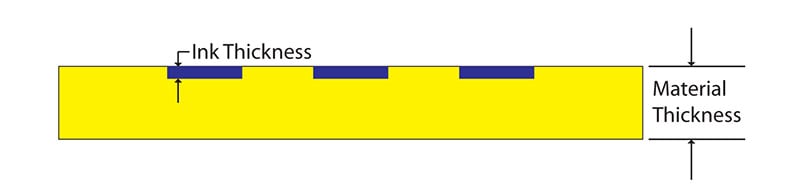
- Relief Depth: Limited to ~0.008”–0.020” (0.2mm–0.5mm) for standard plates; deeper relief requires specialized thick photopolymer.
- Ink Compatibility: Avoid aggressive solvents that may attack uncured or poorly post-cured polymer.
Typical Applications
1. Official & Administrative Seals
- Company seals, notary stamps, government agency seals, legal document stamps.
- High-precision text, emblems, and security patterns (e.g., micro-text, guilloches).
2. Commercial & Industrial Marking
- Product labels, packaging stamps, batch codes, expiration dates, and QR codes.
- Industrial equipment marking, electrical panel labels, and asset tags (when mounted as adhesive labels).
3. Packaging & Labeling
- Food packaging stamps (date codes, lot numbers), pharmaceutical labels, and shipping marks.
- Flexible photo seals for curved or irregular packaging surfaces.
4. Arts, Crafts & Promotions
- Custom stamps for crafts, scrapbooking, and promotional giveaways.
- Logo stamps for branding, event tickets, and personalized gifts.
5. Textile & Garment Marking
- Fabric stamps for clothing tags, care labels, and brand markings (using heat-resistant photopolymers).
 EN
EN