Chemical etching, also known as photo-chemical etching or acid etching, is a precision manufacturing process that utilizes specialized acidic solutions (such as ferric chloride for stainless steel, hydrochloric acid-based mixtures for copper, or sodium hydroxide for aluminum) to selectively etch custom designs, text, logos, or functional patterns into the surface of metal materials. Unlike mechanical engraving that may cause material deformation or edge burrs, chemical etching achieves a smooth, uniform recessed effect by leveraging controlled chemical reactions—ensuring the design is inherently integrated with the metal substrate rather than just superficially applied. This intrinsic bonding is what makes etched components stand out for exceptional durability and long-term legibility, even in harsh operating environments such as outdoor exposure, industrial machinery use, or frequent handling.
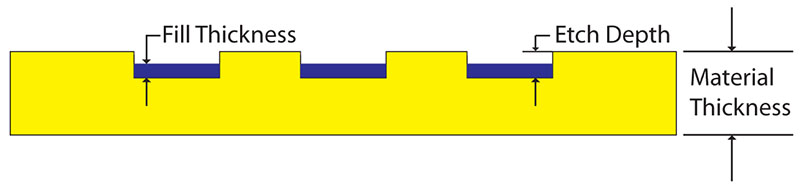
In commercial nameplate production, the etching depth is not a one-size-fits-all parameter but is carefully calibrated based on three core factors: first, the height and stroke width of the text or graphics—finer lines (as narrow as 0.1mm) and smaller characters typically require shallower etching (around 0.0015”) to maintain clarity, while bold logos or high-contrast elements may use deeper etching (up to 0.006”) for enhanced tactile and visual impact; second, the type of metal or alloy being processed—softer metals like aluminum or copper allow for slightly deeper etching without compromising structural integrity, while harder materials such as 304/316 stainless steel often use moderate depths (0.002”–0.004”) to balance precision and production efficiency; third, the intended application scenario—nameplates for industrial equipment or outdoor signage may adopt deeper etching (0.004”–0.006”) to resist wear, corrosion, and fading, while decorative or lightweight nameplates might opt for shallower depths to preserve material thinness and aesthetic subtlety.
This process’s ability to combine precision, durability, and design flexibility has made it the preferred choice for custom nameplates across industries, especially in export-oriented orders where compliance with international quality standards (e.g., BSCI, ISO 9001) and long service life are non-negotiable requirements.
 EN
EN