What is Resin Doming?
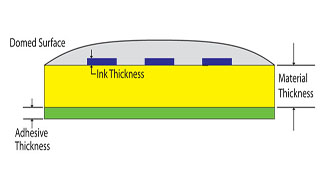
Resin Doming (also called Domed Resin Labeling or Epoxy Doming) is a premium finishing process that applies a clear, viscous, UV-curable or two-part epoxy resin over printed/engraved labels, nameplates, or decals. The resin self-levels and cures to form a 3D, high-gloss, domed surface that encapsulates the underlying graphics—protecting them from environmental damage while creating a tactile, eye-catching 3D effect. Unlike flat laminates or coatings, the domed resin layer adds depth, magnifies graphics for enhanced visibility, and delivers superior durability, making it a top choice for high-end branding, industrial identification, and outdoor labeling applications.
Core Materials of Resin Doming
1. Domed Resin (The Key Coating Material)
Two primary types are used in commercial production, both forming a clear, flexible, and scratch-resistant finish after curing:
Key Resin Properties: High transparency (90%+ light transmittance), scratch resistance (3–5H pencil hardness), chemical resistance (oils, solvents, cleaning agents), UV resistance (prevents yellowing/fading), and flexibility (resists cracking from substrate bending).
2. Base Substrate (The Label Core)
Resin doming can be applied to almost any printed/engraved flat substrate; the most common options for industrial/commercial labels are:
3. Adhesive Layer (For Self-Adhesive Labels)
High-performance pressure-sensitive adhesive (PSA) is applied to the back of the substrate—acrylic PSA for outdoor/long-term bonding, rubber-based PSA for indoor/short-term use. For permanent industrial mounting, VHB (Very High Bond) foam tape is an option for curved/irregular surfaces.
Resin Doming Process (Step-by-Step)
The process is highly automated for mass production and can also be done manually for small runs/prototypes; the core steps are consistent for UV-curable and epoxy resin (differing only in curing).
1.Base Label Preparation
2.Resin Preparation
3.Resin Application
Key Note: The dispense volume determines the dome height—more resin creates a taller, more pronounced 3D effect (taller domes magnify graphics more effectively).
4.Curing (The Critical Hardening Step)
5.Post-Processing & Finishing
Key Advantages of Resin Domed Technology
1.Superior Environmental Protection: The thick, seamless resin layer fully encapsulates graphics, providing IP65/IP67 water/dust resistance, UV protection (prevents ink fading/metal oxidation), and chemical resistance (oils, solvents, cleaning agents). Ideal for outdoor, industrial, and automotive under-hood applications.
2.3D Tactile & Visual Appeal: The high-gloss, domed 3D surface creates a premium tactile feel and visual depth; the curved resin magnifies underlying graphics/text, enhancing readability and brand visibility—far more eye-catching than flat labels.
3.Exceptional Durability: Cured resin has high scratch resistance (3–5H), impact resistance, and flexibility; it resists cracking, peeling, or chipping even when the substrate is bent (e.g., curved metal/plastic surfaces). The resin layer also protects the substrate from abrasion and corrosion.
4.Longevity: Resin domed labels have a service life of 5–15 years (outdoor) and 10+ years (indoor)—far longer than uncoated or laminated labels. UV-stabilized resin can extend outdoor life to 20+ years.
5.Versatility: Works with all printing/engraving processes (screen printing, digital printing, laser engraving, etching) and almost all flat substrates (metal, plastic, vinyl). Can be applied to small labels (e.g., electronic component tags) and large nameplates (e.g., industrial equipment plates).
6.Customizability: Dome height (0.5mm–3mm) is fully customizable; the resin can be tinted (clear, colored, or frosted) for unique visual effects (e.g., frosted resin for a matte finish, colored resin for brand matching).
Limitations & Critical Design/Production Considerations
1.Dome Height Restrictions: Excessively tall domes (>3mm) may cause resin sagging/cracking during curing; tall domes also require thicker substrates to prevent warping. Ideal Dome Height: 0.5mm–2mm for most applications (balances 3D effect and curing stability).
2.Air Bubble Defects: Air bubbles in the resin cause unsightly surface blemishes; avoid rapid stirring, use vacuum degassing (for epoxy), and ensure a dust-free application environment.
3.Substrate Flatness: Resin self-levels, so uneven substrates will result in an uneven dome surface; ensure the base label is flat and rigid (or flexible with minimal warpage).
4.Indoor/Outdoor Compatibility: Paper/cardstock substrates are only suitable for indoor use (resin cannot prevent paper water damage); for outdoor use, choose metal (aluminum/stainless steel) or UV-stabilized plastic (PET/PC).
5.Cost Consideration: Resin doming is a premium process with higher material/labor costs than flat coating/lamination; it is most cost-effective for high-value, high-durability label applications (not low-cost, disposable labels).
6.Curing Control: UV resin requires uniform UV exposure (shadow areas cause incomplete curing); epoxy resin requires strict temperature control (low temperatures slow curing, high temperatures cause bubbling).
Typical Applications
 EN
EN