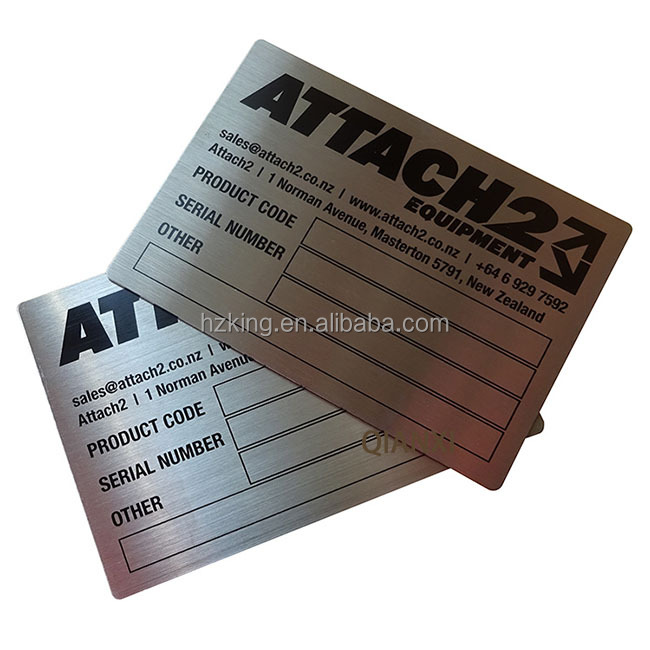
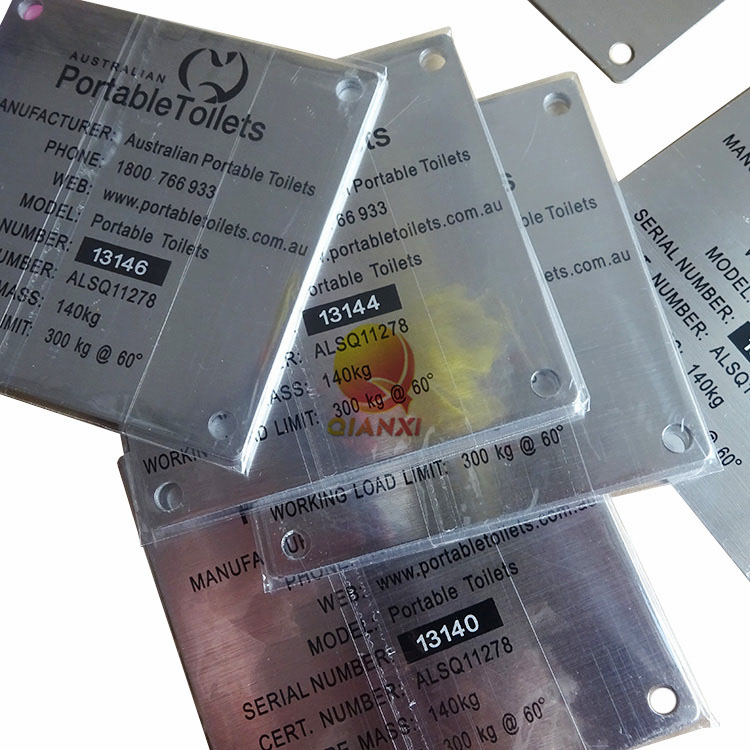
stainless steel nameplates
Stainless steel nameplates provide clear, durable identification for equipment, products, rooms, panels, and industrial assets. Manufacturers use stainless steel nameplates to display product names, model numbers, serial codes, safety warnings, operating instructions, logos, and tracking information. Their strong metal surface supports long-term use where paper labels, plastic tags, or painted markings may fade, peel, or break.
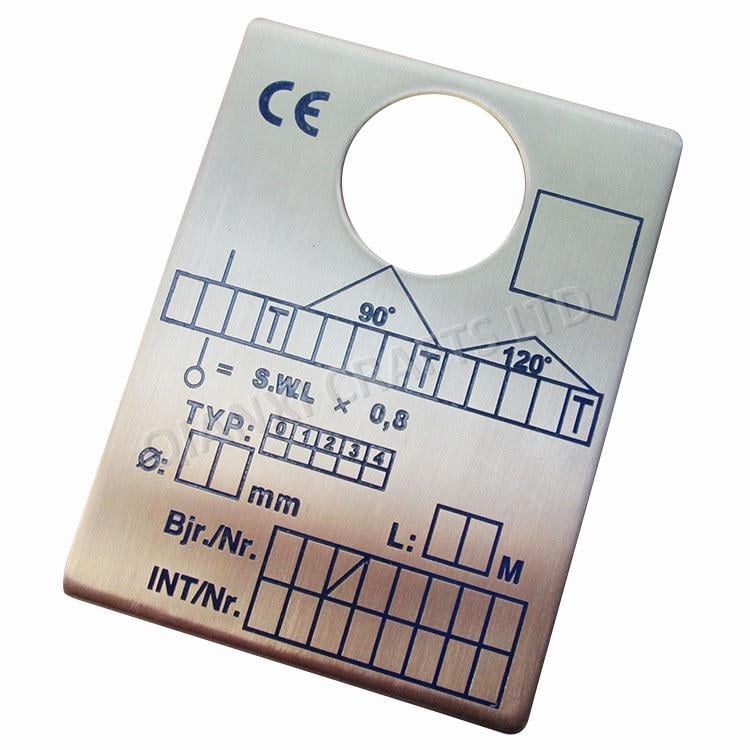
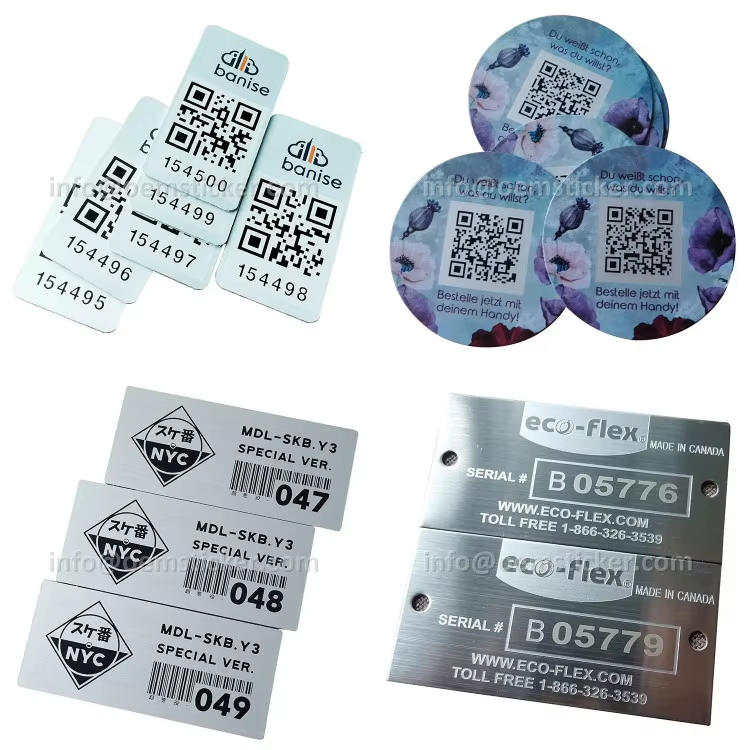
Most stainless steel nameplates use 304 or 316 grade steel, giving buyers a practical balance of strength, corrosion resistance, and appearance. 316 steel suits coastal, chemical, marine, and high-moisture environments, while 304 steel works well for general indoor and outdoor identification. Stainless steel nameplates can receive etched, engraved, printed, embossed, or laser-marked graphics. These processes create sharp text and symbols in different sizes, finishes, and colors.
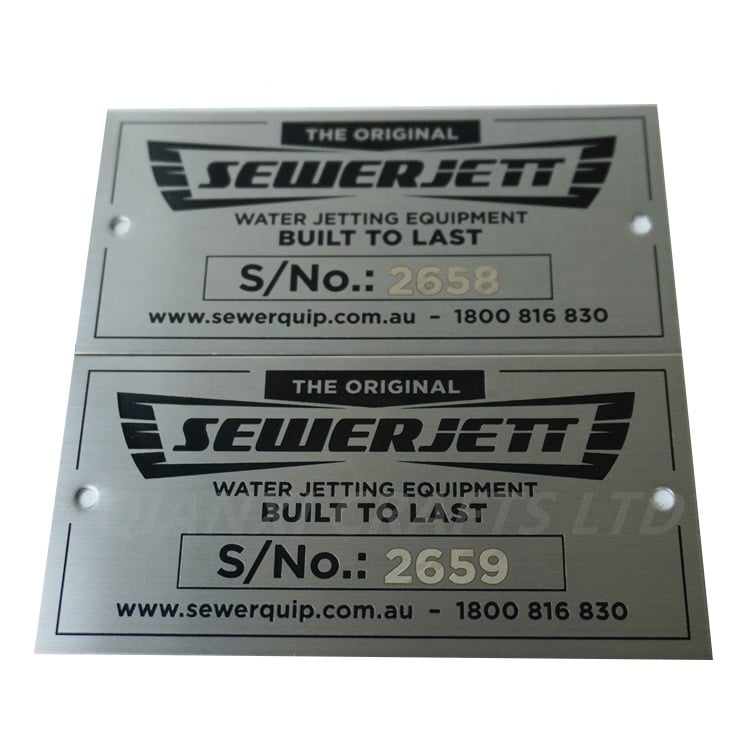
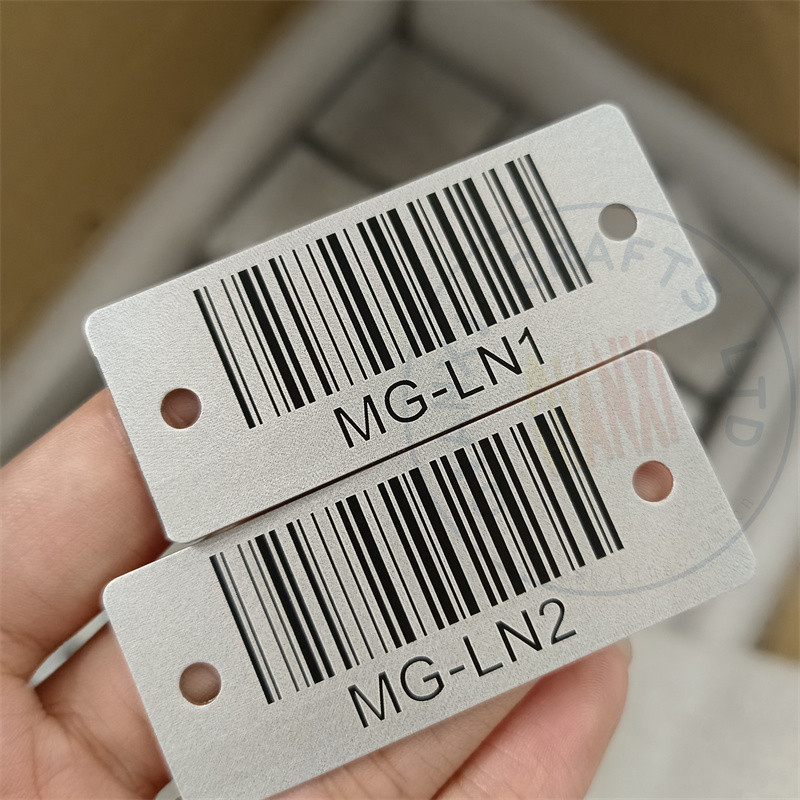
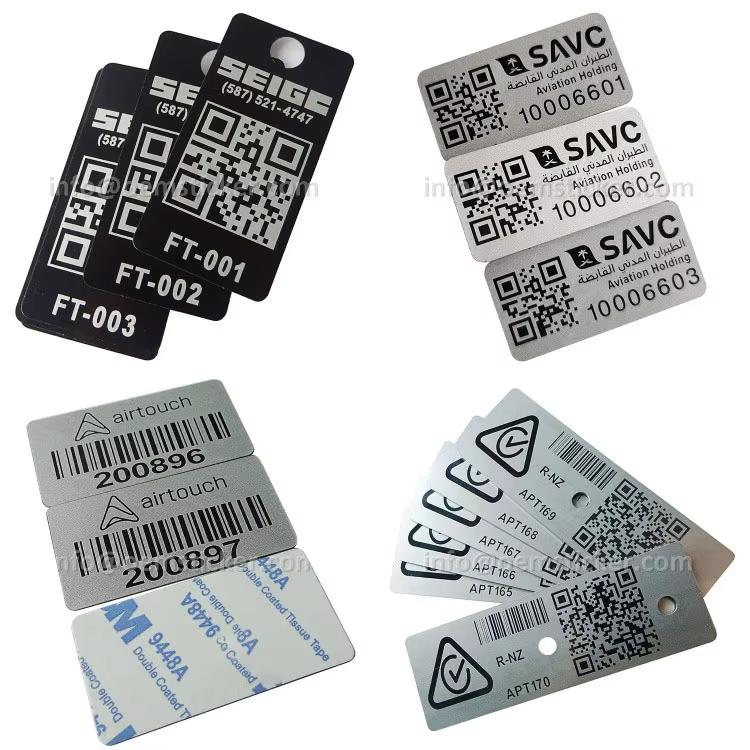
Key technical features include strong adhesives, drilled mounting holes, rounded corners, brushed or mirror surfaces, protective coatings, barcodes, QR codes, and variable data. Stainless steel nameplates can also support serial numbering, company branding, and custom layouts. Depending on the design, stainless steel nameplates resist heat, sunlight, water, oils, cleaning agents, abrasion, and regular handling.
Their main function is to keep essential information visible and accurate throughout a product or asset's service life. Stainless steel nameplates help users identify equipment quickly, follow instructions correctly, trace items, and meet labeling requirements. They suit electrical cabinets, pumps, machinery, vehicles, appliances, medical equipment, control systems, and architectural installations. Buyers can specify dimensions, thickness, finish, marking method, adhesive, and mounting style to match the working environment.
 EN