 EN
EN

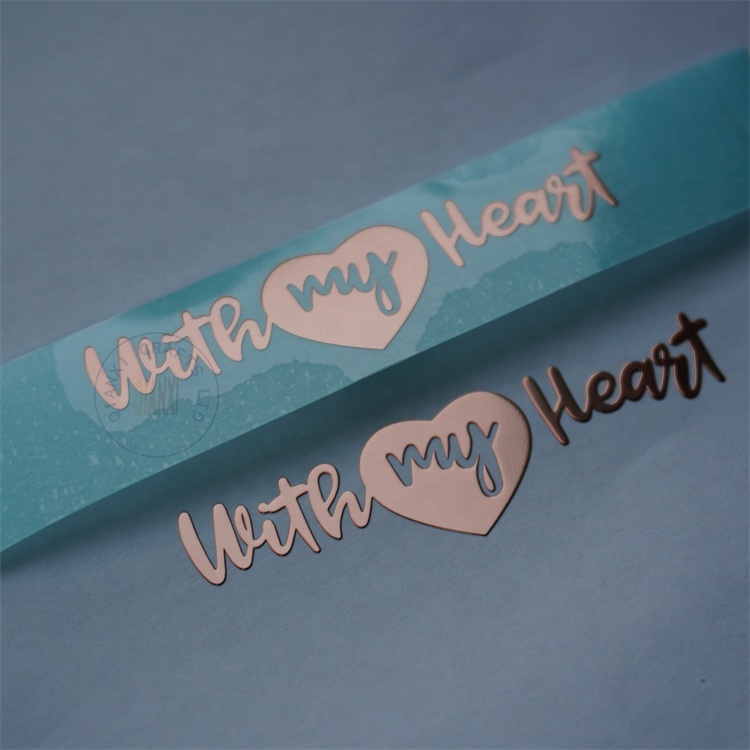
Choosing between metallic stickers and regular ones is not simply a matter of aesthetics. The decision touches on brand perception, surface compatibility, environmental exposure, and the long-term durability expectations of the application. Whether you are labeling a premium consumer product, marking industrial equipment, or creating branded packaging, the type of sticker you choose sends a distinct message to your audience and determines how well the label will hold up over time.
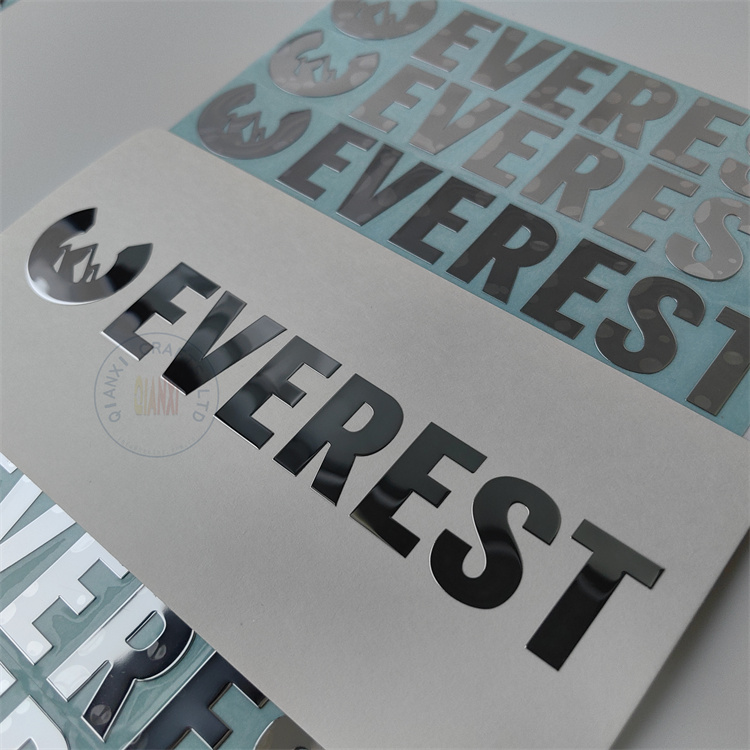
Understanding when to deploy metallic stickers versus standard vinyl or paper options requires a practical framework built around your product's purpose, environment, and branding goals. This guide walks through the key decision factors so procurement managers, product designers, and brand managers in B2B contexts can make the right call with confidence. The difference between the two label types goes far deeper than shine, and matching the right format to the right application is what separates professional results from mediocre ones.
Understanding What Sets Metallic Stickers Apart
Material Composition and Construction
Metallic stickers are typically produced using electroformed nickel, electroplated metal layers, or metallized polyester films that give them their distinctive reflective, high-end surface. Unlike regular paper or standard vinyl stickers, metallic stickers carry actual metal properties — whether that means a chrome finish, a gold-toned surface, or a brushed silver appearance. This construction process is far more involved than printing ink onto a substrate, which is why metallic stickers occupy a different tier of label performance entirely.
Regular stickers, by contrast, are typically produced on paper, polypropylene, or basic vinyl stock. They are printed using inkjet, laser, or flexographic methods and may receive a laminate coating for added protection. While these methods are cost-effective and versatile, they simply cannot replicate the structural integrity or premium look that comes with true metallic stickers. The material difference translates directly into differences in durability, tactile quality, and perceived brand value.
When you apply metallic stickers to a product surface, the result is a label that looks and feels as though it belongs to the product itself. This level of integration is particularly important in industries where the label is not just functional but also part of the brand identity — electronics, automotive accessories, luxury goods, and high-end appliances, for example.
Surface Finish and Visual Impact
One of the most compelling reasons to choose metallic stickers over regular ones is the visual depth they create. The reflective surface of metallic stickers interacts with ambient light in a way that standard printed labels simply cannot. A chrome or gold metallic sticker on a dark surface creates contrast and dimension that reads as premium and intentional, not as an afterthought.
Regular stickers can be printed with metallic inks or foil effects, but these are surface treatments that mimic the appearance of metal rather than delivering it. A trained eye — and often an untrained one — can immediately distinguish a genuine metallic sticker from a print simulation. For brands that depend on a luxury or technical image, this distinction is critical. It affects not just how the product looks on a shelf or in a showroom, but how it photographs, how it appears in promotional materials, and how customers perceive quality when they hold it in their hands.
Scenarios Where Metallic Stickers Are the Clear Choice
Premium Product Branding and Packaging
When a product is positioned at the premium or luxury end of a market segment, every detail contributes to or detracts from the brand promise. Metallic stickers are especially well-suited for products where tactile quality and visual authority matter — think high-end audio equipment, precision tools, cosmetics packaging, specialty beverages, or branded accessories. In these contexts, a standard sticker would undercut the product's perceived value regardless of how well it is printed.
For B2B manufacturers supplying products to retail chains or export markets, metallic stickers serve as a quiet but powerful signal to buyers and end consumers alike. They communicate that the brand has invested attention in every detail of the product, including its labeling. This alignment between product quality and label quality strengthens overall brand equity and supports premium pricing strategies.
Metallic stickers are also particularly effective in gift packaging and limited-edition product runs, where the visual presentation carries an outsized share of the value proposition. A metallic brand badge on a gift box transforms ordinary packaging into something that feels exclusive and thoughtfully crafted.
Industrial and Technical Identification Needs
Beyond aesthetics, metallic stickers offer practical performance advantages in industrial environments. When a label must survive exposure to chemicals, moisture, UV radiation, mechanical abrasion, or extreme temperature fluctuations, metallic stickers outperform standard alternatives by a significant margin. Electroformed nickel labels and thin metal transfer stickers, for instance, maintain legibility and adhesion under conditions that would cause paper or basic vinyl labels to peel, fade, or delaminate.
Equipment manufacturers, electronics producers, and industrial machinery suppliers often rely on metallic stickers for rating plates, compliance labels, serial number tags, and brand identification on units that will be used in demanding environments. The permanence of metallic stickers in these scenarios is not just a quality preference — it is often a functional necessity tied to regulatory compliance and traceability requirements.
When the label must remain readable and intact for the operational lifetime of a product — which could be ten, fifteen, or twenty years — metallic stickers provide a level of reliability that no paper or standard synthetic sticker can match. This makes them the practical choice as well as the aesthetic one in many B2B applications.
When Regular Stickers Are the Better Fit
Short-Term and Promotional Applications
Regular stickers make excellent sense for applications where permanence is not a priority. Promotional campaigns, event labeling, temporary price marking, seasonal packaging updates, and short-run product variants are all situations where the cost and production complexity of metallic stickers would be unnecessary. If a label is only expected to remain in place for days, weeks, or a single sales cycle, standard vinyl or paper stickers deliver the necessary function at a fraction of the cost.
Similarly, for interior applications with limited environmental exposure — such as labeling office supplies, indoor retail shelving units, or product samples — regular stickers provide more than adequate performance. The value proposition of metallic stickers is most apparent in demanding environments and premium contexts; when neither of those conditions applies, the investment premium they carry is harder to justify.
High-Volume, Cost-Sensitive Production Runs
In large-volume manufacturing settings where labels are applied by automated systems at high speed across millions of units, the cost differential between metallic stickers and regular ones becomes a significant factor in unit economics. For commodity products, private-label goods, or items competing on price, optimizing label costs is a legitimate and sensible strategy.
Regular stickers can be produced quickly, at scale, and with great flexibility for design changes. They support variable data printing for serialization and barcoding in ways that are straightforward and cost-effective. For operations where labeling is purely functional and not a brand differentiator, standard stickers remain the workhorse of the industry for good reason.
The key is honest assessment: is this label carrying brand weight, or is it purely informational? When the answer is purely informational, regular stickers often win on practicality. When brand weight is involved, metallic stickers typically justify their cost through the perception value they generate.
Decision Factors: A Framework for Choosing
Evaluating Environmental Exposure
The environment where the labeled product will be used or stored is one of the most decisive factors in choosing between metallic stickers and regular ones. Outdoor equipment, automotive parts, marine products, and industrial tools face UV exposure, humidity, temperature cycling, and physical abrasion. In these conditions, metallic stickers are structurally better equipped to maintain appearance and adhesion over the required service life.
Products used indoors in controlled conditions — office equipment, consumer electronics kept in protective cases, medical devices in clinical environments — still benefit from metallic stickers if brand image is a priority, but the durability argument is less urgent. In these cases, the decision shifts more toward brand strategy than environmental necessity.
Always map the expected service environment before making a label specification decision. A label that looks great at the factory but fails in the field reflects poorly on the product and the brand. Metallic stickers reduce this risk significantly in challenging conditions.
Assessing Brand Positioning and Customer Expectations
Brand positioning is perhaps the most strategically important consideration. If your product competes in a segment where customers have elevated expectations of quality, presentation, and detail, metallic stickers align with those expectations. If your brand communicates 'professional grade,' 'precision engineered,' or 'premium quality,' the labels on your product need to reinforce those claims rather than contradict them.
For OEM manufacturers supplying to major brands, the label specification may be dictated by the brand owner's standards. In many cases, those standards require metallic stickers for all customer-facing brand marks. Understanding your customer's expectations — and their customer's expectations — is essential when specifying label type in a supply chain context.
Regular stickers signal a different set of values: accessibility, utility, volume production. There is nothing wrong with that signal in the right context. The goal is alignment, not hierarchy. Match the label type to the product story you are telling, and both metallic stickers and regular ones can be used with great effect in their respective roles.
Application Surface and Adhesion Considerations
Curved, Textured, and Non-Standard Surfaces
Metallic stickers, particularly thin metal transfer types and electroformed badges, are engineered to conform to surfaces that pose challenges for standard labels. They can adhere to curved surfaces, textured substrates, and contoured product geometries where thick or rigid regular stickers would lift at the edges or wrinkle. This conformability makes metallic stickers especially useful for round containers, cylindrical equipment housings, and ergonomic product designs.
Regular stickers tend to perform better on flat, clean surfaces where full-face adhesion is achievable. On complex surfaces, they are more prone to edge lifting, particularly over time or when exposed to environmental cycling. If your product has a non-standard form factor, this is a strong argument in favor of metallic stickers designed for conforming adhesion.
Surface Material Compatibility
The material of the surface being labeled also matters. Metallic stickers are well-suited for metal, glass, high-density plastics, and coated surfaces. Their adhesive systems are typically formulated to bond with the kind of hard, smooth surfaces found on industrial and consumer products. Regular stickers work across a broader range of substrates but may not achieve the same bond quality on very smooth or low-energy surfaces without specialized adhesive variants.
For applications where the label must remain permanently attached to metal or glass surfaces without any risk of removal or tampering, metallic stickers with permanent adhesive systems are the appropriate specification. Some metallic sticker formats are designed to be tamper-evident, providing additional security value for product authentication and anti-counterfeiting applications.
FAQ
Are metallic stickers more durable than regular stickers?
Yes, in most application environments, metallic stickers significantly outperform regular stickers in terms of durability. Their metal-based construction resists UV fading, moisture ingress, chemical exposure, and physical abrasion far better than paper or standard vinyl alternatives. This makes metallic stickers the preferred specification for products intended for long service lives or demanding environments.
Can metallic stickers be used on curved or irregular surfaces?
Many metallic stickers, particularly thin metal transfer types and electroformed nickel labels, are specifically engineered to conform to curved, contoured, and textured surfaces. Their thin profile and flexible construction allow them to adhere cleanly to product geometries where thicker regular stickers would fail. Always confirm the conformability specification with your supplier based on your specific surface geometry.
When do regular stickers make more financial sense than metallic stickers?
Regular stickers make more financial sense in high-volume, cost-sensitive production runs where the label is purely functional and not a brand differentiator. Promotional applications, temporary labeling, short product runs, and interior applications with minimal environmental exposure are all contexts where regular stickers deliver sufficient performance at a lower cost per unit. The investment in metallic stickers is best justified when brand positioning, durability, or permanence requirements are present.
Do metallic stickers work for product authentication purposes?
Yes, metallic stickers are widely used in product authentication and anti-counterfeiting applications. Their complex construction is difficult to replicate without specialized manufacturing equipment, making them a credible security feature. Some metallic sticker formats are designed to be tamper-evident, leaving visible evidence of any removal attempt. For brands concerned with counterfeit risk or product integrity in the supply chain, metallic stickers offer a meaningful layer of protection that regular stickers cannot provide.