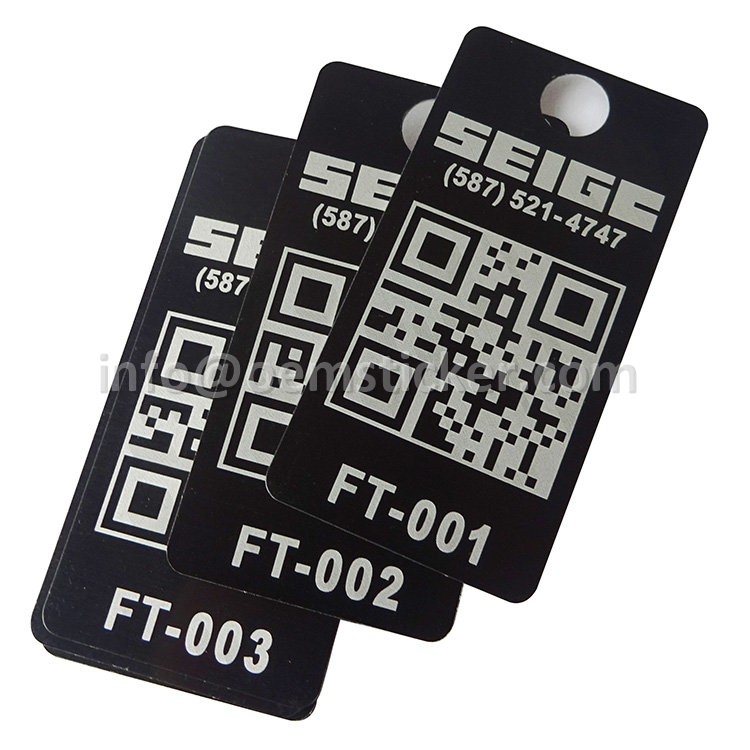

Metal asset tags are durable identification labels manufactured from aluminum, stainless steel, or other metal alloys, designed to permanently mark and track valuable equipment, tools, machinery, and infrastructure assets throughout their operational lifecycle. Unlike paper labels or plastic alternatives, metal asset tags withstand extreme temperatures, harsh chemicals, outdoor exposure, and mechanical abrasion, making them the preferred solution for industries where asset identification must remain legible and intact for years or decades. These identification plates serve as the physical anchor point for asset management systems, linking tangible equipment to digital inventory databases, maintenance schedules, compliance documentation, and financial records through serialized numbering, barcodes, QR codes, or RFID technology integration.

Understanding how metal asset tags function within organizational asset management frameworks requires examining both their physical construction characteristics and their operational role in tracking workflows. These identification solutions combine materials engineering with information design principles to create permanent marking systems that facilitate auditing, theft prevention, maintenance coordination, warranty verification, and regulatory compliance across manufacturing facilities, healthcare institutions, transportation fleets, construction sites, and public infrastructure networks. The fundamental working principle centers on attaching a permanent, machine-readable identifier to each asset, enabling rapid verification of ownership, location history, service records, and operational status through scanning or manual entry into centralized management platforms.
Physical Composition and Manufacturing Methods
Material Selection for Durability Requirements
The effectiveness of metal asset tags begins with appropriate material selection based on the operating environment and expected lifespan. Aluminum alloys represent the most common choice for general industrial applications due to their favorable balance of corrosion resistance, lightweight properties, and cost efficiency. Anodized aluminum provides enhanced surface hardness and color stability, making it suitable for equipment exposed to moderate chemical exposure or outdoor weathering. Stainless steel grades, particularly 304 and 316 variants, offer superior resistance to saltwater corrosion, extreme temperatures, and harsh chemical environments, making them essential for marine equipment, pharmaceutical manufacturing, and petrochemical facilities where asset identification must survive decades of exposure.
Brass and zinc alloy metal asset tags serve specialized applications requiring specific aesthetic qualities or electromagnetic properties. The material thickness typically ranges from 0.5mm to 2.0mm depending on durability requirements and attachment method constraints. Thicker gauges provide greater resistance to bending and impact damage but may complicate adhesive bonding on curved surfaces. The substrate selection directly influences the tag's resistance to temperature extremes, with aluminum maintaining integrity from negative 40 degrees Celsius to 150 degrees Celsius, while specialized stainless steel formulations can withstand cryogenic applications or furnace proximity installations where conventional labels would immediately fail.
Marking and Information Encoding Techniques
Creating permanent, legible identification on metal surfaces requires specialized marking processes that physically alter the substrate rather than applying surface coatings vulnerable to wear. Chemical etching represents a traditional method where acid-resistant masks protect selected areas while chemical solutions remove metal from exposed regions, creating recessed text, logos, and barcode patterns. This subtractive process produces high-contrast markings with excellent durability since the information exists as a physical topology change rather than a surface coating. Photochemical etching enables fine detail reproduction suitable for complex logos, small text, and high-density data matrix codes on metal asset tags requiring maximum information density within limited surface area.
Laser engraving technology has emerged as the dominant marking method for modern metal asset tags, offering precision, speed, and automation advantages. Fiber lasers ablate thin layers of metal or create oxidation patterns that generate high-contrast markings without consumable materials or chemical waste streams. The non-contact nature eliminates mechanical stress on thin substrates while enabling rapid customization for serialized numbering sequences. Stamping and embossing processes create raised or recessed characters through mechanical deformation, producing tactile identification resistant to paint overspray or surface contamination. Each marking technique offers distinct advantages for specific application requirements, with selection depending on character size, information complexity, production volume, and environmental exposure factors.
Attachment Methods and Installation Considerations
Permanent attachment of metal asset tags to equipment surfaces requires matching the bonding method to substrate characteristics, surface preparation constraints, and expected mechanical stress. High-performance acrylic adhesives with foam carriers provide excellent conformability to irregular surfaces while maintaining bond strength across temperature cycling and chemical exposure. These pressure-sensitive adhesives require clean, dry surfaces free from oils, dust, and mold release agents to achieve optimal adhesion. Surface preparation typically involves solvent cleaning followed by abrasion to increase surface energy and mechanical interlocking. The adhesive selection must consider the substrate coefficient of thermal expansion to prevent differential movement that could compromise bond integrity during temperature fluctuations.
Mechanical fastening through rivets, screws, or specialized clips offers superior retention for high-value assets or applications where removal attempts must leave visible evidence. Through-hole mounting requires drilling the asset, which may not be permissible on sealed enclosures or warranty-protected equipment. Self-tapping screws enable attachment to sheet metal surfaces without pre-drilling, though they create stress concentrations that could initiate corrosion in outdoor applications. Welded studs provide the most permanent attachment for metal asset tags on structural steel components, though installation complexity limits this method to critical infrastructure applications. Hybrid attachment combining adhesive backing with mechanical fasteners offers redundancy, ensuring identification remains intact even if one attachment mode fails during the asset's operational lifetime.
Information Architecture and Data Integration
Encoding Schemes for Asset Identification
The information content on metal asset tags follows structured encoding schemes that enable efficient data capture and database integration. Sequential serial numbers provide unique identification within an organization's inventory, typically incorporating prefix codes that identify asset categories, acquisition years, or responsible departments. Linear barcodes such as Code 39 or Code 128 enable rapid scanning with handheld readers, translating visual patterns into alphanumeric strings that query asset management databases. The barcode symbology selection depends on character set requirements, data density constraints, and reader compatibility within existing inventory systems. Human-readable text accompanies machine-readable codes to enable manual verification when scanning equipment is unavailable or when visual inspection confirms tag presence during routine audits.
Two-dimensional matrix codes, particularly QR codes and Data Matrix symbols, dramatically increase information capacity on metal asset tags with limited surface area. These codes can encode complete URLs linking to web-based asset profiles, embed maintenance instructions directly within the tag, or store encrypted authentication data preventing counterfeit tag reproduction. The error correction capabilities inherent in matrix codes ensure partial readability even when physical damage or contamination obscures portions of the pattern. This resilience proves critical for metal asset tags on field equipment where scratching, paint overspray, or corrosion may degrade tag appearance over years of service. Advanced encoding incorporates check digits and validation algorithms that detect transcription errors when manually entering serial numbers, maintaining data integrity across mixed scanning and manual entry workflows.
Integration with Asset Management Platforms
Metal asset tags function as the physical interface between tangible equipment and digital management systems, enabling bidirectional information flow that supports operational decision-making. When technicians scan barcodes or QR codes on metal asset tags using mobile devices or dedicated readers, the captured identifier queries centralized databases retrieving complete asset histories including acquisition cost, depreciation schedules, maintenance records, calibration certifications, and current location assignments. This instant access eliminates manual record searching and ensures service personnel reference accurate equipment specifications before performing maintenance or repairs. The tag identifier serves as a foreign key linking multiple database tables, associating the physical asset with purchase orders, warranty documents, operator training records, and incident reports throughout the equipment lifecycle.
Modern asset management platforms leverage metal asset tags as data collection points during routine audits and inventory cycles. Mobile applications guide audit teams through facilities, prompting verification scans of expected assets at designated locations while flagging discrepancies between physical inventory and database records. GPS coordinates captured during outdoor equipment scans enable location tracking for mobile assets, creating movement histories that optimize deployment strategies and detect unauthorized relocations. Integration with maintenance management systems automatically generates work orders when equipment reaches scheduled service intervals, with technicians scanning metal asset tags to document task completion, record meter readings, and update operational status. This closed-loop workflow ensures asset data remains current and actionable rather than degrading into outdated documentation disconnected from operational reality.
Role in Compliance and Audit Processes
Regulatory frameworks across industries mandate permanent identification and tracking documentation for equipment subject to safety inspections, calibration requirements, or operational certifications. Metal asset tags provide the durable identification necessary to satisfy these compliance obligations, with serialized numbering enabling inspectors to verify that specific equipment units have completed required testing protocols. Medical devices, pressure vessels, lifting equipment, and measurement instruments typically require traceability to manufacturer certifications, installation records, and periodic inspection reports. The permanent nature of metal asset tags ensures this documentation chain remains intact throughout equipment lifespans spanning decades, preventing compliance gaps that could result in regulatory violations or safety incidents.
Financial auditing procedures rely on metal asset tags to reconcile physical inventory with depreciation schedules and capital asset registers maintained in accounting systems. External auditors conducting annual reviews select sample assets from financial records, then physically locate equipment using tag identifiers to verify existence, condition, and proper classification. The tamper-evident characteristics of properly installed metal asset tags help detect unauthorized asset transfers or disposal that could indicate control weaknesses or fraudulent activity. Insurance policies covering equipment fleets often require permanent identification systems, with metal asset tags serving as the verification mechanism during claims processing. Photographic documentation of damaged equipment includes tag serial numbers to conclusively link insurance claims to specific covered assets, preventing fraudulent submissions or valuation disputes.
Environmental Durability and Longevity Factors
Chemical Resistance and Contamination Tolerance
The operational environments where metal asset tags must function include exposure to aggressive chemicals that rapidly degrade polymer-based identification solutions. Anodized aluminum tags maintain legibility when exposed to alkaline cleaning solutions, hydraulic fluids, and moderate acid concentrations common in manufacturing facilities. The anodizing process creates a sealed oxide layer that protects the underlying aluminum while locking pigments into the surface for long-term color stability. Stainless steel metal asset tags withstand direct exposure to chlorinated solvents, saltwater spray, and acidic process streams that would corrode aluminum substrates. The passive chromium oxide layer on stainless steel continuously regenerates when scratched, providing self-healing corrosion protection unavailable with coated materials.
Laser-marked metal asset tags demonstrate superior resistance to solvent cleaning compared to printed labels, as the marking exists as a physical surface modification rather than an applied ink layer. Industrial cleaning protocols using high-pressure spray, ultrasonic baths, or aggressive degreasers do not affect laser-engraved identification, ensuring tags remain legible throughout equipment refurbishment cycles. Chemical exposure testing protocols evaluate tag durability by immersing samples in representative fluids for extended periods, measuring changes in contrast ratio, adhesive bond strength, and substrate integrity. These validation procedures ensure selected metal asset tags will survive the specific chemical environment of the intended application, preventing premature identification failure that could compromise asset tracking effectiveness.
Temperature Extremes and Thermal Cycling
Equipment operating in temperature extremes requires metal asset tags engineered to maintain physical integrity and adhesive bonding across the thermal range. Cryogenic applications such as liquid nitrogen storage tanks or superconducting equipment demand materials that remain ductile at temperatures below negative 150 degrees Celsius, where many adhesives become brittle and fail. Specialized acrylic adhesive formulations maintain bond strength in cryogenic environments, while stainless steel substrates avoid the embrittlement issues affecting some aluminum alloys at extreme cold. High-temperature applications including furnace components, exhaust systems, and steam equipment require metal asset tags rated for continuous exposure above 200 degrees Celsius, with ceramic-filled adhesives or mechanical attachment methods replacing conventional pressure-sensitive adhesives.
Thermal cycling between temperature extremes creates differential expansion stresses at the tag-to-substrate interface, potentially causing adhesive delamination or mechanical fatigue in riveted attachments. Metal asset tags serving outdoor equipment experience daily thermal cycles as solar heating raises surface temperatures above ambient, followed by radiative cooling after sunset. This cycling accumulates thousands of expansion-contraction events annually, progressively degrading adhesive bonds unless the system design accommodates movement. Flexible adhesive layers with high elongation capability absorb differential expansion without transferring excessive stress to the bond line, while matching tag material to substrate thermal expansion coefficients minimizes relative movement. Proper design consideration of thermal effects during metal asset tag specification prevents premature failures that compromise asset identification integrity.
Physical Abuse and Impact Resistance
Operational environments subject equipment to impacts, abrasion, and mechanical abuse that quickly destroy paper labels or thin polymer tags. Metal asset tags fabricated from 1.0mm or thicker material withstand incidental impacts from tools, contact with adjacent equipment during transport, and abrading contact with operator clothing or protective gear. The substrate stiffness prevents tearing or deformation that would render identification illegible, while the inherent scratch resistance of anodized or hardened metal surfaces maintains barcode readability despite surface contact. Curved or radiused edges on metal asset tags eliminate sharp corners that could catch on objects or create safety hazards, improving retention by reducing mechanical removal forces during normal equipment use.
Deliberate tampering attempts or removal efforts leave obvious evidence on properly installed metal asset tags, supporting theft prevention and chain-of-custody verification. Tags attached with high-strength adhesives fracture rather than cleanly releasing, leaving residue and substrate damage that indicates tampering. Serialized metal asset tags enable blacklisting stolen equipment in industry databases, reducing resale value and facilitating recovery. The substantial effort required to remove welded or riveted metal identification deters casual theft while creating forensic evidence if removal is attempted. This tamper-evident characteristic makes metal asset tags essential for high-value portable equipment where theft risk justifies premium identification solutions beyond the capabilities of removable labels.
Application Selection and Implementation Strategy
Matching Tag Specifications to Asset Characteristics
Successful metal asset tag implementation requires analyzing equipment characteristics, operating environments, and organizational tracking requirements to specify appropriate tag configurations. Large machinery and infrastructure components accommodate substantial tag sizes enabling large text and multiple data encoding formats, while small tools and instruments demand compact designs maximizing information density within limited attachment areas. Surface geometry influences attachment method selection, with flat panels accepting adhesive-mounted tags while curved pipes or cylindrical components may require wrap-around designs or clip-mounted solutions. Asset mobility affects tag placement decisions, with portable equipment requiring protected locations minimizing snag hazards while stationary installations prioritize visibility for audit efficiency.
Material compatibility assessment prevents galvanic corrosion when dissimilar metals contact in the presence of electrolytes. Stainless steel metal asset tags attached to aluminum equipment housings create corrosion cells if moisture bridges the interface, necessitating insulating adhesive layers or protective coatings. Environmental exposure severity guides material grade selection, with marine applications requiring 316 stainless steel while indoor office equipment accepts standard aluminum tags. Expected service life considerations balance tag durability against replacement feasibility, with permanent installations like building systems justifying premium materials while consumable tooling may accept shorter-lived identification. This specification discipline ensures metal asset tags match application requirements without over-engineering solutions that inflate costs unnecessarily.
Integration with Existing Asset Management Workflows
Deploying metal asset tags requires coordination with established inventory processes, database structures, and personnel training programs to ensure seamless adoption. Existing asset numbering schemes may require modification to accommodate barcode symbology constraints or database field length limitations, necessitating migration planning that maintains historical data integrity. Scanner hardware compatibility verification ensures selected barcode or QR code formats work reliably with deployed mobile devices and fixed readers, preventing readability issues that undermine tracking effectiveness. Database administrators must configure asset management platforms to accept scanned identifiers, trigger appropriate lookup queries, and present relevant information to field personnel in formats supporting operational decision-making.
Workforce training programs familiarize personnel with scanning procedures, tag placement protocols, and data entry responsibilities that maintain asset information accuracy. Maintenance technicians learn to scan metal asset tags when initiating work orders, documenting completed tasks, and recording meter readings or inspection results. Receiving personnel attach tags to newly acquired equipment following standardized procedures that ensure consistent placement, proper surface preparation, and complete database enrollment before assets enter service. Periodic refresher training addresses common errors, reinforces data quality standards, and introduces new capabilities as asset management systems evolve. This human factors consideration proves as critical as the physical metal asset tags themselves, since tracking system effectiveness ultimately depends on consistent, disciplined execution of identification workflows by personnel throughout the organization.
Lifecycle Management and Tag Replacement Planning
Despite their durability, metal asset tags eventually require replacement due to physical damage, obsolete encoding formats, or equipment refurbishment that removes original identification. Establishing replacement protocols maintains tracking continuity when tags become illegible or detach from assets. Routine inspections during preventive maintenance cycles identify damaged tags requiring replacement before complete failure interrupts tracking capabilities. Replacement tags receive the same serial number as damaged originals, with database records noting the retagging event to maintain audit trails. Spare tag inventory stocked at maintenance facilities enables immediate replacement during routine service, preventing tracking gaps that compromise inventory accuracy.
Technology evolution may necessitate systematic tag replacement campaigns when organizations migrate from linear barcodes to QR codes, implement RFID integration, or adopt new asset management platforms with different encoding requirements. These large-scale retagging projects require careful planning to minimize operational disruption while ensuring complete asset population conversion. Phased approaches prioritize high-value or frequently moved assets for early conversion while scheduling low-priority equipment retagging during planned maintenance windows. Database migration procedures must preserve historical maintenance records, financial data, and compliance documentation while associating legacy information with new tag identifiers. This lifecycle perspective treats metal asset tags as durable but eventually consumable components requiring ongoing management attention rather than permanent install-and-forget solutions.
FAQ
How long do metal asset tags typically last in industrial environments?
Metal asset tags manufactured from anodized aluminum or stainless steel typically maintain legibility and adhesion for 10 to 20 years in standard industrial environments with moderate chemical exposure and temperature ranges. Harsh conditions including continuous outdoor exposure, marine environments, or extreme temperatures may reduce lifespan to 5 to 10 years depending on material selection and attachment method quality. Laser-engraved markings generally outlast chemically etched text since the laser ablation creates deeper surface modifications more resistant to gradual wear. Regular inspection during preventive maintenance cycles enables proactive replacement before tags become illegible, ensuring continuous asset tracking capability throughout equipment operational lifespans.
Can metal asset tags be removed and reused on different equipment?
Metal asset tags installed with high-strength permanent adhesives cannot be cleanly removed and reused, as removal attempts typically damage the tag, leave adhesive residue, or mar the substrate surface. This permanence is intentional, providing tamper evidence that supports theft prevention and chain-of-custody verification. Mechanically fastened tags using screws or rivets can theoretically be removed and reinstalled, though this practice compromises the unique identification principle central to asset tracking systems. Best practice treats metal asset tags as permanently married to specific equipment throughout its lifecycle, with replacement tags receiving new serial numbers if reidentification becomes necessary due to equipment refurbishment or tag damage.
What information should be included on metal asset tags for optimal tracking?
Effective metal asset tags include a unique serial number or asset identifier as the primary data element, supplemented by machine-readable encoding such as barcodes or QR codes enabling rapid scanning. Human-readable text should include the serial number and potentially a company name or logo for visual brand identification. Additional information such as acquisition dates, department codes, or equipment categories is better stored in databases rather than crowded onto limited tag surface area. QR codes can encode URLs linking to web-based asset profiles containing comprehensive equipment documentation, maintenance histories, and operational specifications. The key principle involves balancing on-tag information density against readability, favoring minimal permanent marking supplemented by rich database content accessible through the tag's unique identifier.
Are metal asset tags compatible with RFID technology for automated tracking?
Metal asset tags can integrate RFID technology through hybrid designs combining traditional visual identification with embedded RFID inlays, though metal substrates create technical challenges for radio frequency transmission. Standard RFID tags perform poorly when mounted directly on metal surfaces due to electromagnetic interference and detuning effects that reduce read range or prevent detection entirely. Specialized RFID tags designed for metal mounting incorporate spacer layers and tuned antenna designs that overcome these limitations, enabling reliable reading at distances of one to three meters depending on frequency band and reader power. Organizations can deploy metal asset tags with printed barcodes or QR codes alongside separate RFID tags, or specify hybrid solutions embedding RFID capability within the metal tag structure for applications where automated scanning provides sufficient operational value to justify the added cost and complexity.