 EN
EN

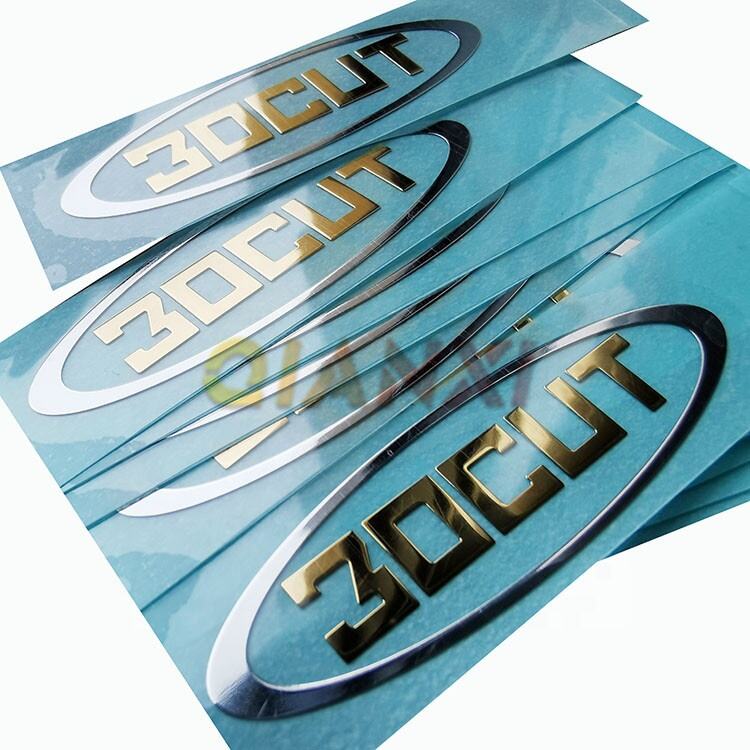
When it comes to outdoor labeling, identification, and branding, not all adhesive products perform equally under the pressures of the natural environment. metallic stickers have become a preferred solution across a wide range of industries precisely because they combine durability, aesthetic appeal, and functional resilience. However, choosing the right metallic stickers for outdoor applications is not simply a matter of picking the most visually appealing option — it requires a clear understanding of material properties, adhesive performance, surface compatibility, and environmental exposure conditions.
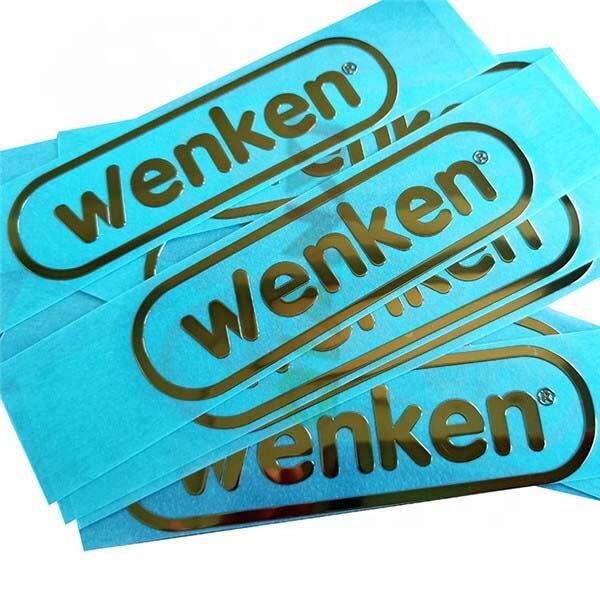
The outdoor environment is unforgiving. UV radiation, moisture, temperature fluctuations, chemical exposure, and physical abrasion can all degrade a label far sooner than expected if the wrong product is selected. Metallic stickers designed specifically for outdoor use are engineered to withstand these challenges, but the specific combination of substrate, finish, adhesive, and protective coating must align with your actual use case. This guide walks you through every critical factor you need to evaluate before making a final decision.
Understanding the Materials Behind Outdoor Metallic Stickers
Common Metal Substrates Used in Outdoor Labels
The foundation of any high-quality outdoor metallic sticker is its substrate material. The most commonly used metals in professional outdoor labeling include stainless steel, aluminum, and occasionally brass or titanium for specialized applications. Each material carries distinct advantages depending on the deployment environment. Stainless steel metallic stickers offer exceptional corrosion resistance and are particularly well suited for marine environments, chemical processing plants, and any application where contact with moisture or corrosive agents is frequent.
Aluminum is another extremely popular choice for metallic stickers used outdoors. It is lightweight, cost-effective, and naturally resistant to oxidation due to its passive oxide layer. Anodized aluminum takes this a step further by electrochemically enhancing that oxide layer, creating a surface that resists scratching, UV fading, and chemical attack far better than untreated aluminum. For most standard outdoor industrial and commercial labeling needs, anodized aluminum metallic stickers provide an excellent balance of performance and value.
It is also important to consider the thickness of the metal substrate. Thinner foil-type metallic stickers may be sufficient for sheltered outdoor environments, while thicker rigid metal nameplates or tags are more appropriate when physical impact, vandalism resistance, or long-term permanence is required. Always match the substrate thickness to the mechanical demands of your application.
Surface Finish and Its Role in Outdoor Performance
The surface finish of metallic stickers affects not only their visual appearance but also their durability in outdoor conditions. Brushed finishes are popular for their industrial aesthetic and their ability to mask minor surface scratches over time. However, a brushed finish without a protective topcoat can be vulnerable to corrosion if water or chemicals penetrate the directional grain lines. For outdoor use, it is strongly advisable to specify metallic stickers with a clear protective overlay or laminate over the brushed surface.
Mirror-polished finishes on metallic stickers are visually striking but require more careful consideration outdoors. They are more prone to showing scratches and may reflect sunlight in ways that create visual interference. Matte and satin finishes tend to perform more practically outdoors because they reduce glare, minimize the visibility of surface wear, and often accept protective coatings more uniformly. Laser-engraved metallic stickers benefit greatly from matte or brushed backgrounds because the engraving contrast remains legible even after prolonged outdoor exposure.
Adhesive Selection for Outdoor Environments
Why Adhesive Performance Matters More Than Most Buyers Realize
Many buyers focus almost exclusively on the metal face material when selecting metallic stickers for outdoor use, but the adhesive system is equally critical. An outdoor adhesive must maintain strong bonding across dramatic temperature swings — from freezing winter conditions to intense summer heat — without delaminating, bubbling, or losing its grip. Pressure-sensitive adhesives formulated with acrylic or modified acrylic chemistry are the gold standard for outdoor metallic stickers because they maintain adhesion stability across a temperature range typically spanning minus 40 degrees Celsius to over 100 degrees Celsius.
Rubber-based adhesives, while sometimes used in general-purpose metallic stickers, tend to break down faster under UV exposure and are not recommended for long-term outdoor deployment. If your application involves prolonged direct sunlight, UV-stabilized acrylic adhesives are essential. These adhesives resist photodegradation and maintain bond integrity for years rather than months. Always confirm the adhesive specification with your supplier and request testing data if the application is mission-critical.
Surface Preparation and Adhesion Compatibility
The performance of even the best adhesive on metallic stickers depends heavily on surface preparation. For outdoor applications, the bonding surface must be clean, dry, and free from oils, dust, or existing coatings that could interfere with adhesion. Textured, rough, or low-surface-energy substrates such as certain plastics or powder-coated metals may require a primer or adhesion promoter to achieve a reliable bond. Smooth, high-surface-energy materials such as clean stainless steel or glass typically provide excellent adhesion for metallic stickers without additional preparation steps.
It is also worth considering whether the installation environment will allow for proper adhesive cure time. Most pressure-sensitive adhesives used in metallic stickers reach their maximum outdoor bond strength after 24 to 72 hours of dwell time at room temperature. Installing metallic stickers in cold or wet conditions can delay or compromise this curing process. Where possible, allow for proper installation conditions to maximize the long-term outdoor performance of your chosen product.
Environmental Resistance Specifications to Evaluate
UV Resistance and Color Stability
UV degradation is one of the primary reasons outdoor labels fail prematurely. For metallic stickers, UV resistance needs to be evaluated at two levels: the metal substrate and any printed or applied graphics. Bare metal surfaces — particularly anodized aluminum and stainless steel — are inherently UV-stable and will not bleach or yellow under sun exposure. However, if your metallic stickers incorporate colored fills, screen-printed graphics, or digital printing, those elements must also be UV-resistant. Inks and coatings used on outdoor metallic stickers should be rated for prolonged UV exposure, typically certified to withstand several years of direct sunlight without significant color shift.
Laser-engraved metallic stickers have a distinct advantage in this area because the marking is created by permanently altering the metal surface rather than depositing an ink film on top of it. This means the information on laser-engraved metallic stickers will not fade, peel, or wash away regardless of UV exposure. For high-durability outdoor identification where permanence is non-negotiable, laser engraving on anodized aluminum or stainless steel metallic stickers is widely considered the most reliable option available.
Moisture, Chemical, and Temperature Resistance
Outdoor metallic stickers must also contend with moisture in various forms — rain, condensation, high humidity, and occasional submersion or spray in some industrial settings. Stainless steel metallic stickers naturally resist rust and corrosion, making them the preferred choice for coastal, marine, or high-humidity environments. Aluminum metallic stickers with proper anodizing also perform well against moisture, but raw or poorly anodized aluminum can develop surface oxidation over time that affects both appearance and legibility.
Chemical resistance is another dimension to verify when selecting outdoor metallic stickers for industrial use. Environments involving cleaning agents, solvents, fuels, oils, or process chemicals require metallic stickers whose face material, printing method, and adhesive have all been tested against those specific substances. Epoxy-coated metallic stickers and those with chemically resistant overlaminates offer an additional barrier layer for particularly harsh chemical environments. Always consult technical datasheets and request chemical resistance specifications before finalizing your order for demanding industrial applications.
Temperature cycling is a stress that is often underestimated. Metallic stickers installed on metal equipment surfaces in outdoor environments will expand and contract with the substrate as temperatures change. This thermal cycling can stress the adhesive interface over time. Products engineered specifically for outdoor use account for this with flexible adhesive formulations that can accommodate differential expansion without losing bond integrity. Confirm that the metallic stickers you select have been validated for the specific temperature range present in your application.
Design and Customization Factors for Outdoor Metallic Stickers
Marking Methods and Their Suitability for Outdoor Use
How information is applied to metallic stickers fundamentally determines how long that information will remain readable outdoors. The most durable marking method for outdoor metallic stickers is laser engraving, which physically removes or alters the metal surface to create permanent, deeply embedded marks. Laser-engraved metallic stickers retain their text, numbers, barcodes, and logos indefinitely under outdoor conditions because there is no ink or coating to degrade. This makes them the top choice for asset identification, equipment nameplates, serial number plates, and compliance labeling in outdoor industrial settings.
Chemical etching is another permanent marking method commonly used in high-quality outdoor metallic stickers. Etching creates recessed designs in the metal surface that are highly resistant to abrasion and environmental exposure. Etched metallic stickers are particularly popular for premium branding applications, architectural signage, and safety labels where both permanence and visual quality are important. Screen printing and digital printing can also be used on metallic stickers, but for truly outdoor-durable results, printed metallic stickers must be protected with a certified UV-resistant and scratch-resistant overlay laminate.
Size, Shape, and Application-Specific Design Considerations
The physical design of metallic stickers should reflect the specific demands of the outdoor application. Larger metallic stickers applied to flat surfaces are generally straightforward, but curved or irregular surfaces require a metallic sticker with sufficient flexibility or a conformable adhesive system to ensure full contact and bond integrity. Very thin aluminum or foil-type metallic stickers can conform to mild curves, while rigid stainless steel or thicker aluminum formats are better suited to flat applications.
Edge finishing is a detail that significantly affects the outdoor longevity of metallic stickers. Sharp, unfinished edges can be a starting point for corrosion, especially on cut aluminum products. Look for metallic stickers with deburred or rounded edges, and where maximum corrosion resistance is needed, confirm that the edge treatment or anodizing covers the cut edges as well as the face surface. Rounded corner designs also perform better than sharp-cornered metallic stickers in outdoor environments because they resist edge lifting as the adhesive ages.
Making the Final Selection Decision
Matching Product Specifications to Application Requirements
Choosing outdoor metallic stickers correctly requires translating your specific application conditions into a clear set of product requirements. Start by defining the exposure environment — is the application in direct sun, sheltered outdoor conditions, a coastal zone, or an industrial chemical environment? Next, determine the required service life — a two-year promotional label has very different requirements from a permanent equipment nameplate expected to last 20 years. These two factors alone will significantly narrow the viable options among available metallic stickers.
Consider also the bonding surface material and geometry, the type of information to be displayed, whether regulatory compliance marking is involved, and what your budget constraints are. Premium metallic stickers using stainless steel substrates, laser engraving, and UV-stable adhesives naturally carry a higher cost than standard aluminum foil labels, but in demanding outdoor applications, the investment is typically justified by a dramatically longer service life and lower total cost over time.
Working with a Qualified Supplier
Once your requirements are clearly defined, working with a supplier who understands outdoor labeling in depth is essential. A qualified supplier of metallic stickers should be able to provide material datasheets, adhesive performance certifications, environmental test data, and sample products for evaluation before you commit to a full order. Be cautious of suppliers who cannot provide this documentation, as it suggests the products may not have been properly tested for outdoor conditions.
Requesting samples and conducting your own adhesion and durability evaluations is always a wise practice when selecting metallic stickers for a new or demanding outdoor application. Real-world testing on the actual bonding surface, under representative environmental conditions, provides confidence that cannot be fully substituted by datasheet review alone. Reputable suppliers expect and welcome this kind of evaluation process.
FAQ
What is the best metal material for outdoor metallic stickers?
Stainless steel and anodized aluminum are the two best substrate materials for outdoor metallic stickers. Stainless steel offers superior corrosion resistance and is ideal for marine or chemical environments, while anodized aluminum provides an excellent balance of UV resistance, lightweight construction, and cost-effectiveness for most standard outdoor applications. The best choice depends on your specific environmental exposure and durability requirements.
How long do metallic stickers last outdoors?
The outdoor service life of metallic stickers varies significantly depending on the substrate material, marking method, adhesive system, and environmental conditions. Laser-engraved stainless steel or anodized aluminum metallic stickers with UV-stable acrylic adhesives can reliably last 10 to 20 years or more in most outdoor environments. Standard foil-type metallic stickers with printed graphics and general-purpose adhesives may last two to five years under moderate outdoor exposure. Always match the product specification to the expected service life requirement.
Can metallic stickers be used on curved outdoor surfaces?
Yes, some metallic stickers can be applied to curved surfaces, but material selection is critical. Thin aluminum foil or flexible metallic sticker formats can conform to mild curves, while rigid stainless steel or thick aluminum products are designed for flat surfaces only. For curved outdoor applications, specify conformable metallic stickers with flexible adhesive systems that maintain full surface contact across the curve. Always test on the actual curved substrate before committing to a large quantity.
Do metallic stickers require any special preparation before outdoor installation?
Proper surface preparation is essential for achieving reliable outdoor adhesion with metallic stickers. The bonding surface should be thoroughly cleaned with isopropyl alcohol or an appropriate surface cleaner to remove oils, dust, and contaminants. Low-surface-energy substrates may require a primer or adhesion promoter. Installation should ideally be performed at temperatures above 10 degrees Celsius and in dry conditions to allow the adhesive to properly wet out and begin curing. Following correct installation procedures significantly extends the outdoor service life of metallic stickers.