 EN
EN

Choosing the right metal nameplate for industrial equipment is a decision that directly affects compliance, safety, and long-term identification reliability. A metal nameplate serves as the permanent record of a machine's specifications, certifications, serial numbers, and operating instructions. Selecting the wrong type can lead to faded markings, failed audits, or costly replacements in demanding environments. Understanding what factors matter most will help you make a confident and informed choice.

Every piece of industrial equipment tells its story through a metal nameplate. From the material grade to the marking technique and mounting method, each detail shapes whether a metal nameplate will perform reliably over years of exposure. This guide walks through the most important selection criteria so engineers, procurement specialists, and facility managers can evaluate their options with precision and confidence.
Material Selection for a Metal Nameplate
Aluminum as a Practical Choice
Aluminum is one of the most widely used substrates for a metal nameplate in general industrial applications. It offers a favorable balance of weight, corrosion resistance, and machinability. An aluminum metal nameplate can withstand moisture, mild chemical exposure, and moderate temperature ranges without degrading. For equipment located indoors or in sheltered outdoor environments, aluminum is often the most cost-effective and practical solution. Anodized aluminum is especially popular because the surface treatment enhances both hardness and legibility when laser-engraved markings are applied.
Stainless Steel for Demanding Conditions
When a metal nameplate must endure harsh industrial conditions such as high humidity, chemical contact, extreme heat, or frequent washing, stainless steel becomes the material of choice. A stainless steel metal nameplate resists rust and corrosion far better than standard aluminum and retains its structural integrity under stress. Equipment in food processing, oil and gas, marine environments, and chemical plants commonly requires a stainless steel metal nameplate to meet both durability and regulatory expectations. The higher material cost is justified by the dramatically extended service life and resistance to surface deterioration.
Marking Methods That Define a Metal Nameplate
Laser Engraving for Permanent Identification
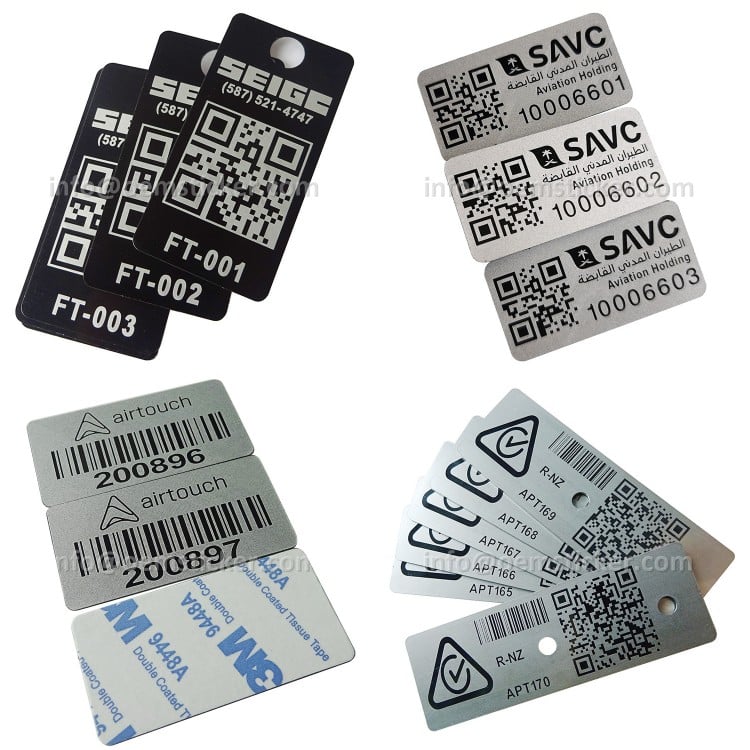
The marking method used on a metal nameplate determines how readable and durable the information will remain over time. Laser engraving is among the most reliable techniques available today. A laser-engraved metal nameplate achieves permanent, deeply recessed marks that cannot be wiped away by solvents, scratching, or environmental exposure. This makes laser engraving particularly suitable for metal nameplate applications where compliance standards require traceability and long-term legibility. The precision of laser systems also allows for fine text, barcodes, QR codes, and complex logos to be reproduced accurately on a metal nameplate surface.
Chemical Etching as an Alternative Technique
Chemical etching is another widely used method for producing a high-quality metal nameplate. In this process, a photoresist mask is applied to the metal surface, and acid selectively removes unprotected material to create recessed marks. A chemically etched metal nameplate delivers sharp detail and is well-suited for complex designs or decorative applications. It is commonly used when a metal nameplate requires a combination of functional data and brand identity. Both laser engraving and chemical etching produce a metal nameplate that meets demanding performance standards, though laser engraving is typically faster and more cost-efficient for smaller production runs.
Key Practical Factors in Metal Nameplate Selection
Operating Environment and Exposure Conditions
The environment where a metal nameplate will be installed plays a critical role in determining which specifications are necessary. Outdoor metal nameplate applications require UV-resistant substrates and markings that do not fade under prolonged sunlight. A metal nameplate exposed to chemicals must use a material and marking method that resists chemical attack. Temperature is another important variable. An aluminum metal nameplate performs well up to moderate heat levels, while a stainless steel metal nameplate can withstand significantly higher operating temperatures without warping or discoloring. Always match the metal nameplate specification to the actual environmental conditions the equipment faces rather than a generic industry standard.
Mounting Style and Attachment Method
How a metal nameplate attaches to equipment affects both its longevity and its appearance. The most common attachment methods include adhesive backing, rivets, screws, and welding. An adhesive metal nameplate is easy to apply and works well on smooth flat surfaces, but may not hold reliably on surfaces that experience vibration, heat cycling, or frequent cleaning. A rivet-mounted or screw-fixed metal nameplate offers greater mechanical security and is preferred for heavy machinery, outdoor equipment, or applications where the metal nameplate must remain in place under physical stress. Welding is reserved for situations where a metal nameplate must be permanently fused to a metal structure. Choosing the correct attachment method ensures that a metal nameplate stays properly positioned throughout the equipment's operational life.
Size, Layout, and Regulatory Content
The size and layout of a metal nameplate must accommodate all required regulatory and operational information clearly. Most equipment nameplates must display data such as model number, serial number, voltage ratings, certification marks, and manufacturer details. A metal nameplate that is too small will compromise legibility, while an oversized metal nameplate may not fit the designated panel space. Before finalizing a metal nameplate design, review the regulatory requirements for your specific industry and region. Compliance-driven content should be planned from the beginning of the metal nameplate design process to avoid reprints or delays in equipment certification.
FAQ
What is the most durable material for a metal nameplate on outdoor equipment?
Stainless steel is generally the most durable material for a metal nameplate used on outdoor equipment. It resists moisture, UV exposure, temperature swings, and chemical contact better than most alternatives. An anodized aluminum metal nameplate is a viable second choice for less aggressive outdoor environments where weight and cost savings are priorities.
How do I ensure a metal nameplate meets compliance requirements?
To ensure a metal nameplate meets compliance requirements, start by identifying the specific standards that apply to your equipment and industry, such as CE, UL, or ISO marking guidelines. Work with a qualified metal nameplate supplier who understands regulatory content requirements. Laser engraving or chemical etching on a durable metal nameplate substrate typically satisfies most traceability and legibility standards required by certification bodies.
Can a metal nameplate be customized with a company logo or color?
Yes, a metal nameplate can be customized with company logos, color fills, and decorative finishes. Techniques such as screen printing, color-filled etching, and anodized aluminum coloring allow a metal nameplate to carry brand identity alongside functional data. However, for applications where a metal nameplate must withstand heavy industrial exposure, recessed engraving or etching without paint fill is recommended to maintain long-term legibility.